Posts

The Witch

[Warning: spoilers ahead...although, frankly, you might read this and realize that this film is not what you would have expected. As always, read at your own risk.] The Witch  is not exactly a horror movie in the classic sense. It is, however, a great example of Gothic horror, which is why I was assigned this film for a class on--you guessed it--Gothic horror. Why is not traditional? Well, there aren't a lot of jump scares or gory moments (although it does have a few moments that come close). There also really isn't a whole lot that happens throughout the span of the movie, other than the slow unraveling of a family in crisis. Unlike Final Destination  or The Shining , our characters don't spend a lot of time investigating or running from the supernatural things that plague them. Also, they speak as one would expect early Puritan settlers to speak. Side note: I love Ralph Ineson, but between his deep voice and the Old English dialect (much of which is taken directly...
Gifted

[Warning: spoiler alert. If you have not seen Gifted , read at your own risk.] That's right, internet, it's me! I have returned! Now that I write blogs for my job, I've had far less time and motivation to do it for myself. But I think it will be good for me to pick up where I left off and try to keep updating my content. So here we go! When my family suggested watching Gifted  for our movie night, I knew very little aside from the fact that it was a custody battle over a genius child happening between her grandmother and her uncle (played by Chris Evans!). It had potential, and we couldn't agree on much else, so I agreed. Interestingly, this movie touched on a topic that I have long been grappling with: how to deal with differences. Young Mary is a child prodigy who is being raised by her uncle after her mother's death. Problems quickly arise when Frank decides to send Mary to a public school instead of continuing her education at home. She doesn't like the ...

Devil in a Blue Dress

Walter Mosley's Devil in a Blue Dress is a classic noir detective story set in 1940s LA (the height of the genre)...but there's a twist: the amateur detective is a black man. You might not have ever thought about the fact that detective stories of this type tend to have few characters of colour, if any, and they certainly don't tend to fill the role of detective. For the classic novels, which were actually written in the '40s, this is not surprising as racism was still quite strong in America (and other places) at that time. This is a really smart move on Mosley's part because it works well with certain elements of the genre, while creating a poignant commentary on both the genre and the era when things don't match, and even when they do. Easy Rawlins, our detective, like so many of the others is a World War II veteran struggling to find work. This is a common theme in works of fiction written after each of the World Wars because women were having to fill jo...

So Where's the Horror? Frankenstein; or the Modern Prometheus

Frankenstein . A classic. Typical of Gothic Horror.... Wait horror? Yes. Oh yeah, angry mobs, violent monster, fires, and all that? Nope, just a killer monster minus any of the usual accompanying suspense. Cheesy one-sided conversation aside, my point is that Frankenstein is not what most of us consider horror. It doesn't fit the levels of suspense and violence that we have come to expect with modern films. This isn't completely unexpected, since those are elements that are harder to transfer onto the page. But Mary Shelley's "ghost story" is frightening because of the story itself. Frankenstein is a cautionary tale about what happens when you create a living being and then abandon it to learn and survive on its own. Victor's monster angrily kills everyone that his creator loves because he feels that his abandonment was cruel and unfair. Victor only makes the irrational decision to create his monster because his mother, the one person who ever really c...

How Bridget Jones's Diary Explores Societal Expectations of Women through Romance

Ah the romance! Always a classic, the romance novel has a long tradition of telling stories about love and relationships. But as any woman can tell you, the idea that female characters are dependent upon men to have a place in the narrative (whether fictional or historical) is wrong. Here's the thing: the genre traces its roots back to the early days of the novel, sometime around the 18th century, when women in society had absolutely no legal status apart from their connection to husbands and fathers. So the fact that these tales are all about loving relationships that end in marriage means that people were aware of the fact that women were expected to marry, but were increasingly intrigued by the idea of marrying for love rather than necessity. Jane Austen, Helen Fielding's inspiration, wrote many such novels. Yet in the mid-'90s, when the columns were first being published, things were very different from the Gregorian days of yore. Feminist movements had been on the ris...

The Castle of Otranto and The Tyranny of Man

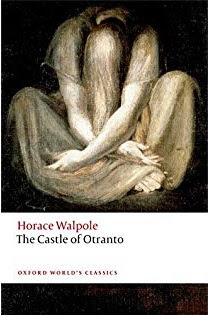
Image
[Warning: This post contains some spoilers. Read at own risk.] The Castle of Otranto is the first (and perhaps most bizarre) Gothic horror novel there is. The dialogue is frantic and hard to distinguish from one speaker to the next, the ghost rarely makes a proper appearance and seems to be only a small danger for most of the plot, identities are repeatedly mistaken, and no one is happy by the end. Perhaps the most troublesome thing in this whole story, however, is that the patriarchal system causes as much destruction as treachery that upset the system in the first place. Manfred, the ruler of Otranto and main antagonist of the story. While it is widely debated whether Manfred should be held responsible for the usurpation of the throne by his grandfather, he nonetheless becomes responsible for all kinds of tyranny when his sole focus becomes the continuation of his lineage for the sake of maintaining said throne. Seeing as there was no legitimate ruler known to the people...

Doctor Strange and Proud: A Warning about Idols in Our Own Lives

To the untrained eye, Doctor Strange is nothing more than a superhero story or a journey of self-discovery. But I am here to tell you that it is actually a story about idols. "Idols?!" you say, "I saw no weird little gods. Devil worship, or something of that sort, maybe." That's true. Of course, I'm not talking about the mysticism at all. The idol in this particular tale is success. Stephen Strange, like so many medical professionals, has spent his entire life training and over-working in hopes of achieving great success and notability. His skills are renowned, and his job is the most important thing in his life. So important, in fact, that when a dangerous car crash destroys his hands and takes away his ability to operate, he throws his life away as he feels that it is hardly worth living. He continues on a mission to find a way to restore his hands, meeting a man who happily explains to him that he found a cure for partial paralysis in a mystic alternat...